


Haroon Khawaja
Reform Advocate, Philanthropist, Entrepreneur, pakistanplan.org
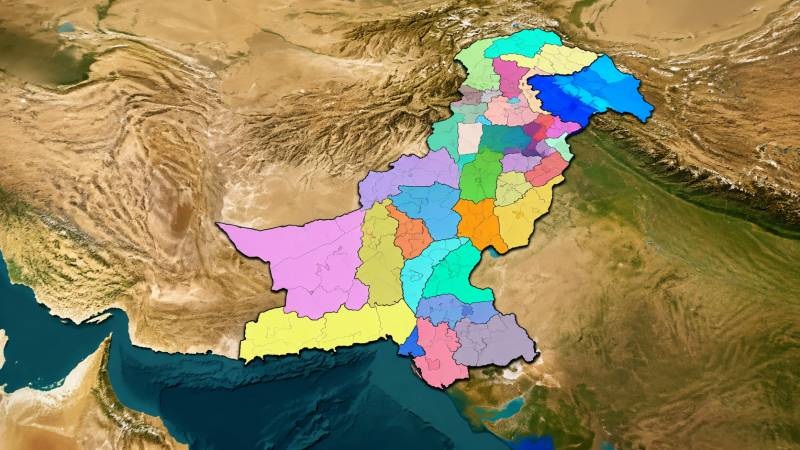
When Pakistan came into being, its eastern wing contained the majority of its population. In the 1951 census, East Pakistan had about 42 million people against 34 million in West Pakistan. By 1971, the populations were roughly 65–70 million and 60 million respectively. More than half a century later, the relationship has reversed: Bangladesh has approximately 176 million people, while Pakistan has about 255 million. More striking is what has happened economically and socially. Despite assassinations, military coups, dynastic politics and repeated unrest, Bangladesh has made remarkable progress. Its GDP stands at approximately $511 billion against Pakistan’s $452 billion, while GDP per capita is about $2,960 compared with $1,901 in Pakistan. The difference extends well beyond GDP. Bangladesh ranks 130 on the Human Development Index against Pakistan at 168. Adult literacy is around 79% versus 59%; infant mortality 24 deaths per 1,000 live births versus 48; maternal mortality 115 per 100,000 versus 155; and life expectancy about 75 years versus 68. How did two countries that shared the same state until 1971, inherited many of the same institutions and experienced many similar political disruptions produce such different outcomes? There are many explanations, but one difference in the structure of government deserves greater attention in Pakistan. Bangladesh does not have powerful provincial governments sitting between the federation and districts as Pakistan does. It has administrative divisions and districts followed by elected local-government institutions, including Upazila and Union Parishads. Reforms have transferred national funds directly to Union Parishads, accompanied by annual audits and performance assessments, bringing spending and accountability closer to citizens. Bangladesh remains more centralized than an ideal local-government system, but its experience raises a fundamental question: does Pakistan need four enormous provincial governments, some governing populations larger than entire countries? Converting Pakistan’s existing divisions into provinces may appear an obvious solution, but it risks perpetuating an administrative geography rooted substantially in structures inherited from the British Raj and modified after independence. Those structures served another age; Pakistan’s population, technology, economy and citizens’ expectations have changed drastically since then. Converting the existing divisions into approximately 32 provinces would certainly improve upon four enormous provinces, but many would still be too large to bring government genuinely close to the people. More importantly, geographical subdivision alone may do little to change the political structure within them. Instead of four sets of dominant political families, Pakistan could simply end up with thirty-two. Dynastic politics might become more deeply entrenched, opportunities for a new generation of leadership remain limited, and accountability stay geographically distant. That would be administrative subdivision rather than genuine political devolution. The challenge is therefore not simply to create more provinces, but to rethink the appropriate unit of government for the twenty-first century. In today’s world, citizens can instantly compare their schools, hospitals, roads, policing and public services with those elsewhere. Government must consequently become smaller in geographical reach, closer to citizens and more directly accountable. For several years, I have argued that Pakistan should consider abolishing the existing provincial tier and, as a first step, convert its approximately 123 districts into provinces. This would move political and administrative authority dramatically closer to the people. It would remove an unnecessary layer of red tape between the federation and citizens, weaken the hold of established political dynasties over enormous territories, create space for new political leadership, bring accountability closer to home and encourage competition among provinces. Moreover, the districts already have the infrastructure to host assemblies and governments, so there would be no substantial new expense on brick and mortar. But this cannot mean merely creating 123 assemblies and changing signboards. Political devolution must be accompanied by administrative and fiscal devolution. Provincial management and policing should pass to the new governments, supported by provincial bureaucracies organized around their security, administrative and social responsibilities. The federal bureaucracy should correspondingly shrink and focus on genuinely federal functions. The new provinces must have meaningful authority to raise revenues and decide how they are spent. Without the ability to tax, manage finances, administer their territories and control policing, they would simply become another layer dependent on Islamabad. Their assemblies should initially be elected for four-year terms: the first map of 123 provinces need not be the final map. After the first four-year cycle, experience would reveal which provinces are economically viable and which should merge with neighbors. Population, economic activity, infrastructure, geography and the practical experience of governing would gradually determine the appropriate size and shape of these units—rather than politicians in Islamabad drawing lines in advance. The number might ultimately be 110 provinces. It might be 90. It might be 70. The point is not to pretend we know the final answer before undertaking the experiment. Approximately 123 provinces may sound radical. But Pakistan’s present system has had more than seven decades to demonstrate what it can deliver. The question is not whether 123 sounds excessive compared with the system we inherited, but whether smaller, financially empowered and politically accountable units could govern better. Start with the districts. Give them political authority, fiscal responsibility and administrative control. Let them govern for four years, compete, produce new leaders and serve citizens much closer to home. Then let experience determine which should remain independent and which should merge. That process will ultimately reveal the number, size and geography of provinces that twenty-first-century Pakistan actually needs.